Multi-Cloud APAC Architecture
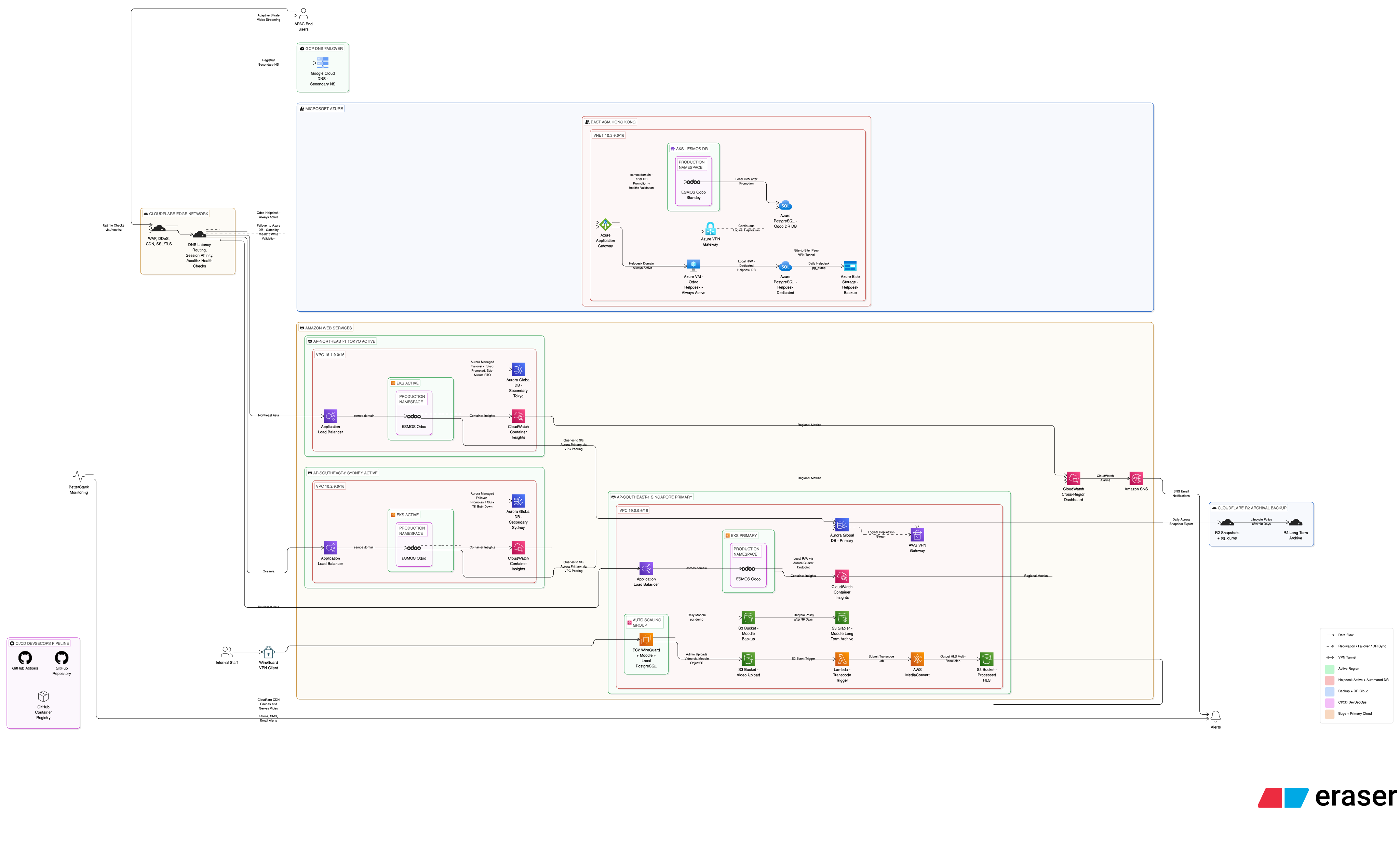
Multi-region AWS (Singapore, Tokyo, Sydney) + Azure DR (Hong Kong) + Cloudflare edge with GCP secondary NS. Architecture diagram embedded inline on the case study page.
Architecture diagram
Context
ESMOS is a fictional regional healthcare provider that needs to scale a single Odoo-based clinical system out across APAC, with hard requirements on availability, disaster recovery, and data sovereignty. The course brief asked for an enterprise solution: multi-region, multi-cloud, with explicit RTO and RPO targets.
The diagram below is the v9.4 output: four clouds, three active AWS regions, an Azure DR + always-active Helpdesk, a Cloudflare edge, a GCP secondary nameserver for DNS resilience, and a backup path to Cloudflare R2.
My role
Team lead and solution architect. With the cloud and architecture background on the team, I drove the regional layout, the failover model, the DR runbook, and the diagram. I authored the Service Design Document the rest of the deliverables hung off, and wrote the rationale for each non-obvious choice (why Aurora Global over manual replication, why a second cloud for DR, why GCP just for DNS).
Architecture, the short version
- Three AWS regions: Singapore primary, Tokyo and Sydney active replicas. Each runs its own EKS cluster with the same Odoo deployment. Latency routing at the edge sends each user to their nearest region.
- Aurora Global Database as the single source of truth. Tokyo and Sydney read the SG primary via VPC peering; on a SG-region failure, Aurora promotes a secondary with sub-minute RTO. If both SG and TK go down, Sydney promotes.
- Azure East Asia in Hong Kong as the cross-cloud DR target. AKS sits idle until a Cloudflare DNS failover (gated by /healthz write validation) flips traffic. The Odoo Helpdesk on Azure runs always-active on its own subdomain.
- Cloudflare for the edge (WAF, DDoS, CDN, TLS) and authoritative DNS. GCP Cloud DNS holds the secondary NS records so DNS itself survives a Cloudflare control-plane outage.
- Cloudflare R2 for cold archival: daily Aurora snapshots get exported to R2 and life-cycled to long-term tier after 90 days. Helpdesk backups land in Azure Blob.
- Moodle on EC2 inside an Auto Scaling Group, with WireGuard for staff access. Video uploads run S3 to Lambda to MediaConvert to HLS, then back out through Cloudflare CDN.
- BetterStack does the external uptime checks. CloudWatch Container Insights per region rolls up into a cross-region dashboard, with SNS pushing alarm emails out.
Decisions worth talking about
Aurora Global over hand-rolled cross-region replication. Managed failover, sub-minute RTO, and the ops team does not have to babysit replication lag. The trade-off is vendor lock-in, but for a healthcare workload the operational simplicity wins.
Multi-cloud DR rather than multi-region within AWS. The brief specifically required resilience against a single-vendor incident. Azure DR adds real cost and complexity, but it is the only way to actually answer the question being asked. If this were my own startup I would push back on the requirement first.
/healthz-gated DNS failover. The failover only flips when an explicit write-path health check confirms Azure DR can take traffic. Cheap insurance against flapping, and forces the runbook to be honest about what 'ready' means.
GCP for DNS only. Three-vendor DNS sounds overkill, but DNS is the single most catastrophic failure surface in a multi-cloud setup. Putting the secondary NS on a third party makes DNS itself survive any single-vendor incident.
What I learned
Every line on this diagram costs something to operate, monitor, or recover from. Most of the work on this project was justifying each line in writing, against the brief, before adding it.
Multi-cloud DR is rare in practice because it doubles the operational surface area. The brief here explicitly required resilience against a single-vendor incident, so the diagram has it.